Cabinet Approves 57 New Kendriya Vidyalayas: Education, wages, and agriculture received a strong push from the Union Cabinet this week, marking a decisive stride towards long-term growth. In a landmark decision, the government has cleared the opening of 57 new Kendriya Vidyalayas (KVs) across the country, while also approving a hike in Dearness Allowance (DA) and Dearness Relief (DR) for millions of central government employees and pensioners. Alongside, ambitious agricultural reforms have also been rolled out to strengthen food security and farmer incomes.
The expansion of Kendriya Vidyalayas is set to significantly boost educational infrastructure. Out of the newly approved 57 KVs, seven will be sponsored by the Union Home Ministry and the remaining by state governments. Notably, 20 of these schools will be opened in districts where no KV facility currently exists, despite having sizable populations of central government employees.
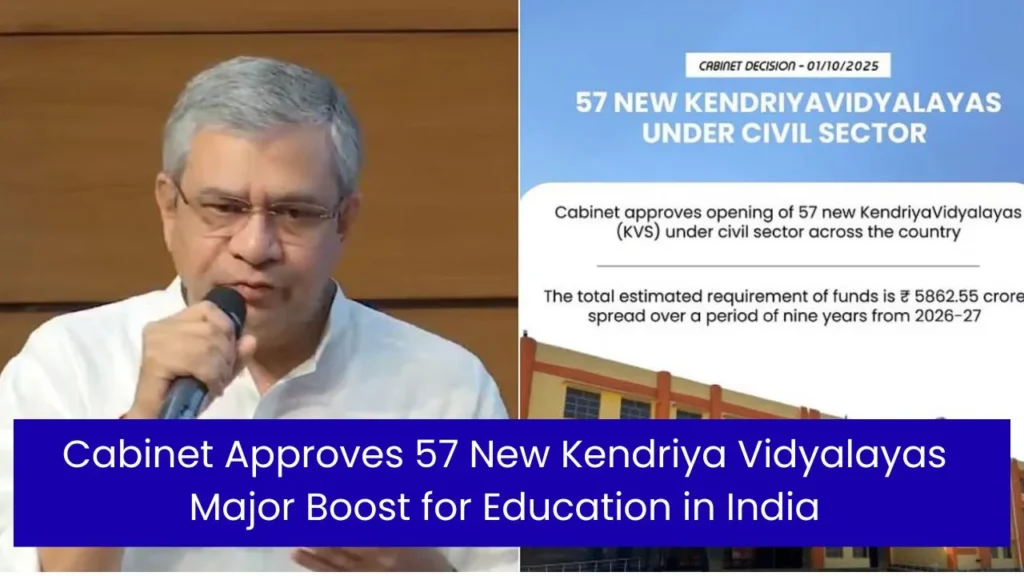
This expansion is expected to create better access to quality education for thousands of students, while also boosting real estate, housing demand, and local economies in regions where these schools will come up. Experts believe this decision is not just an investment in education but also a long-term economic catalyst.
Dearness Allowance and Relief Hike for Employees and Pensioners
In a move to support households against inflationary pressures, the Cabinet has approved a 3% hike in DA and DR for central government employees and pensioners, effective July 1, 2025.
- Beneficiaries: Around 49.19 lakh employees and 68.72 lakh pensioners
- Financial Impact: Rs 10,083.96 crore annually
This announcement will directly enhance the disposable income of government employees, thereby creating a positive spillover effect on consumer demand and financial markets. Economists suggest that such periodic hikes are crucial to sustain purchasing power in times of rising inflation.
Mission for Aatmanirbharta
The Cabinet has also greenlit a six-year mission with a financial outlay of Rs 11,440 crore to achieve self-sufficiency in pulses by 2030-31. The government aims to raise production to 350 lakh tonnes while expanding the cultivation area to 31 million hectares. This mission is part of the broader Aatmanirbhar Bharat initiative, ensuring reduced dependence on imports, better farmer incomes, and resilience against global price fluctuations.
DA Raised to 58% for Staff and Pensioners – How This Impacts Salary & Pensions
3% DA Hike News Today: Govt Set to Approve Allowance for Employees and Pensioners
Get ₹1500 Every Month – Ladki Bahin Yojana Next Installment Date 2025
MSP Hike for Rabi Crops in 2026–27
To further safeguard farmer interests, the Cabinet has approved an increase in the Minimum Support Prices (MSPs) for rabi crops for the 2026–27 marketing season. This timely measure will help ensure profitability for farmers and steady rural growth.
Impact on Economy and Society
- Education: Improved access to quality schooling and associated job creation.
- Employees and Pensioners: Restoration of financial comfort amidst inflation.
- Agriculture: Boost to farmer incomes and food production sustainability.
- Overall Economy: More robust demand, lower import dependency, and long-term structural gains.
FAQs About 57 New Kendriya Vidyalayas Approved
How many new Kendriya Vidyalayas have been approved by the Cabinet?
A total of 57 new KVs have been approved, with 20 of them set up in districts where no KV exists currently.
What is the impact of the 3% DA and DR hike?
The hike benefits over 1.17 crore central government employees and pensioners, improving their purchasing power with an annual financial implication of Rs 10,083.96 crore.
What is the Cabinet’s target for pulses production under the new mission?
The government aims to increase pulses production to 350 lakh tonnes by 2030-31 under a six-year mission with Rs 11,440 crore outlay.
How will the MSP hike affect farmers?
The increase in Minimum Support Prices for Rabi crops in 2026–27 will secure better income support, reduce risks, and ensure profitability for farmers against market fluctuations.