The PM SVANidhi Yojana 2026 continues to be one of the most searched micro-credit schemes for street vendors across India. Launched by the Ministry of Housing and Urban Affairs on June 1, 2020, this collateral-free loan scheme has now been extended until March 31, 2030, with a total outlay of ₹7,332 crore, aiming to benefit 1.15 crore street vendors, including 50 lakh new entrants. As of April 2026, the scheme has recorded cumulative loan disbursements worth ₹17,757 crore, and over 72.71 lakh street vendors have already benefited from it. If you are searching for the latest PM SVANidhi online apply process, the ₹50,000 loan structure, or updated eligibility rules, this guide gives you accurate, current information rather than outdated figures from earlier years.
This article explains how the PM SVANidhi loan scheme works in 2026, including the three loan tranches of ₹10,000, ₹20,000, and ₹50,000, the 7% interest subsidy, digital transaction cashback, and the newly introduced PM SVANidhi Credit Card with a ₹30,000 UPI-linked limit. We also cover the step-by-step registration process on the official portal, documents required, how to check your loan and application status online, and answers to the most frequently asked questions about this scheme. Whether you run a tea stall, vegetable cart, tailoring shop, or barbershop, this guide will help you understand exactly how to benefit from the PM SVANidhi Yojana in 2026.
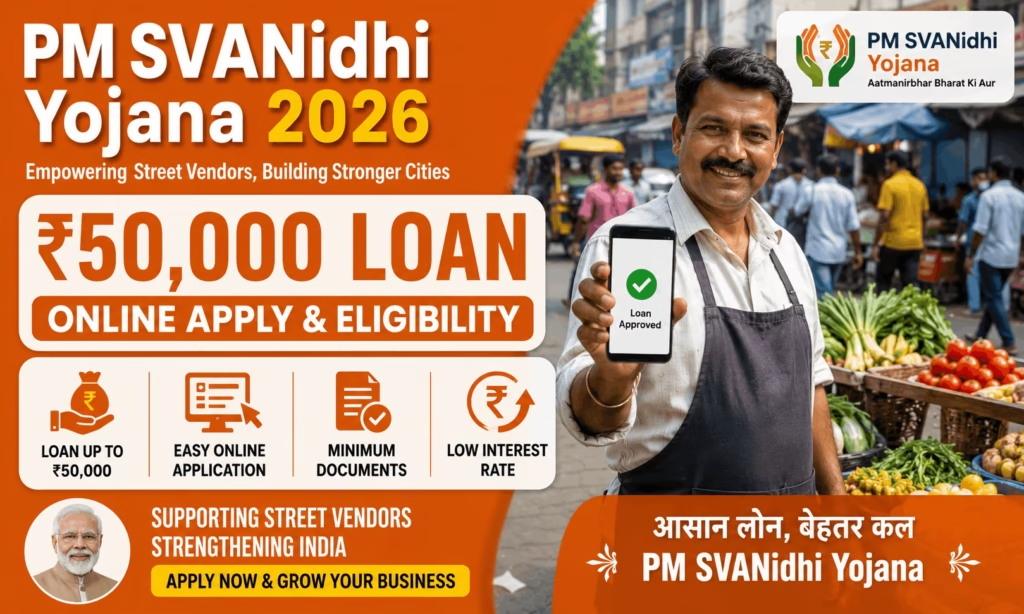
What is PM SVANidhi Yojana 2026?
PM SVANidhi, short for PM Street Vendor’s AtmaNirbhar Nidhi, is a micro-credit facility scheme launched by the Ministry of Housing and Urban Affairs (MoHUA) to support street vendors whose livelihoods were severely affected during the COVID-19 pandemic. The scheme provides working capital loans without any collateral or guarantee, enabling vendors to restart and grow their small businesses in urban, peri-urban, and now increasingly rural areas.
Under the Union Budget 2025-26, Finance Minister Nirmala Sitharaman announced a major revamp of the scheme, introducing enhanced loan limits, a UPI-linked RuPay credit card, and additional capacity-building support for vendors — making PM SVANidhi one of the most actively updated welfare-credit schemes going into 2026.
PM SVANidhi Yojana 2026 Key Highlights
| Particulars | Details |
|---|---|
| Scheme Name | PM Street Vendor’s AtmaNirbhar Nidhi (PM SVANidhi) |
| Launched On | June 1, 2020 |
| Ministry | Ministry of Housing and Urban Affairs (MoHUA) |
| Extended Until | March 31, 2030 |
| Total Revised Outlay | ₹7,332 crore |
| Target Beneficiaries | 1.15 crore vendors (including 50 lakh new entrants) |
| Cumulative Loans Disbursed (April 2026) | ₹17,757 crore |
| Vendors Benefited (as of early 2026) | 72.71 lakh+ |
| Digital Transactions Recorded (till Oct 2025) | 658 crore+ transactions worth ₹7.10 lakh crore |
| First Tranche Loan | ₹10,000 (1-year tenure) |
| Second Tranche Loan | ₹20,000 |
| Third Tranche Loan | ₹50,000 |
| Interest Subsidy | 7% per annum on timely repayment |
| Digital Cashback | Up to ₹1,200–₹1,600 per year |
| New Credit Card Feature | PM SVANidhi Credit Card, UPI-linked, ₹30,000 limit |
| Official Website | pmsvanidhi.mohua.gov.in |
| Toll-Free Helpline | 1800-11-1979 (Mon–Sat, 9:30 AM–6 PM, 8 languages) |
PM SVANidhi Loan Structure: How the ₹50,000 Loan Works
The PM SVANidhi loan is disbursed in three progressive tranches, rewarding timely repayment with access to higher credit:
- First Tranche: ₹10,000, collateral-free, repayable over 1 year.
- Second Tranche: ₹20,000, available after full and timely repayment of the first loan.
- Third Tranche: Up to ₹50,000, available after successful repayment of the second tranche.
According to SBI data, 68% of vendors who repaid their first ₹10,000 instalment proceeded to apply for the second loan, and 75% of those who repaid the second loan went on to secure the third tranche — showing strong repayment discipline among beneficiaries. On timely repayment, vendors also receive a 7% per annum interest subsidy, credited quarterly via Direct Benefit Transfer (DBT), effectively making the loan very low-cost.
PM SVANidhi Credit Card 2026
One of the biggest updates to the scheme in 2026 is the launch of the PM SVANidhi Credit Card, a UPI-linked RuPay card with a ₹30,000 limit, designed to give vendors an additional revolving credit facility alongside their term loans. On January 23, 2026, loans worth ₹206 crore were disbursed to street vendors in Amaravati as part of this credit card initiative rollout, marking one of the scheme’s most significant digital-finance expansions since its launch.
Eligibility Criteria for PM SVANidhi Yojana 2026
To apply for the PM SVANidhi online apply process, applicants must meet the following conditions:
- The applicant must be a street vendor, hawker, or small stall owner operating in urban, peri-urban, or rural areas.
- Vendors in possession of a Certificate of Vending (CoV) or Identity Card issued by Urban Local Bodies (ULBs) are directly eligible.
- Vendors identified in the ULB survey but not yet issued a CoV/ID Card can still apply using their survey reference.
- Vendors without a CoV or survey listing can apply with a Letter of Recommendation (LoR) from the ULB or Town Vending Committee.
- The applicant must have a valid Aadhaar card and an active bank account.
PM SVANidhi Registration 2026
- Visit the official website: pmsvanidhi.mohua.gov.in
- Click on “Apply for Loan” or “Login as Applicant” on the homepage.
- Enter your registered mobile number and click “Request OTP.”
- Enter the OTP received and click “Verify OTP.”
- Select your vendor category — CoV holder, surveyed vendor, LoR-based vendor, or vendor from surrounding development/rural areas.
- Fill in the Survey Reference Number (SRN), personal details, and business information.
- Upload the required documents and select your preferred lending bank.
- Submit the application form to complete registration.
Vendors without internet access can also apply through their nearest Common Service Centre (CSC) or with the help of banking correspondents/agents of empanelled banks and microfinance institutions.
PM SVANidhi Status Check 2026: How to Track Application and Loan Status
Once submitted, applicants can track their PM SVANidhi loan status 2026 directly through the official portal or mobile app:
- Visit pmsvanidhi.mohua.gov.in/Home/Search or the homepage’s “Know Your Application Status” section.
- Enter your Application Number and registered mobile number.
- Alternatively, download the PM SVANidhi mobile app from the Google Play Store and log in with your mobile number for real-time tracking.
- If you don’t know your Survey Reference Number (SRN), use the “Know Your SRN” option and search using your Aadhaar or mobile number, or visit your local ULB office.
Official PM SVANidhi Links
| Official Website | pmsvanidhi.mohua.gov.in |
| Loan Application/Login | Available under “Apply for Loan” on the homepage |
| Application/Loan Status Check | pmsvanidhi.mohua.gov.in/Home/Search |
| Mobile App | PM SVANidhi App (available on Google Play Store) |
| UMANG Integration | Available on the UMANG portal under the PM SVANidhi department listing |
| Home Page | https://emrsbahraichup.in/ |
Documents Required for PM SVANidhi Loan
- Aadhaar Card
- Voter ID Card
- Certificate of Vending (CoV) / Identity Card, or Letter of Recommendation (LoR)
- Bank account details/passbook
- Passport-size photograph
- Any other ULB-issued proof of vendor status (where applicable)
Digital Payment Incentives Under PM SVANidhi 2026
The scheme actively promotes digital transactions among street vendors:
- Vendors who complete a minimum number of digital transactions per month (via UPI, RuPay, or QR code payments) become eligible for a cashback of up to ₹100 per month, amounting to ₹1,200–₹1,600 annually.
- Popular platforms like Paytm, PhonePe, and Google Pay are all valid for earning this cashback.
- This incentive is credited directly into the vendor’s loan account, helping reduce the effective loan burden further.
The PM SVANidhi Yojana 2026 remains a vital financial lifeline for India’s street vendor community, offering collateral-free loans up to ₹50,000, a 7% interest subsidy, digital cashback incentives, and now a UPI-linked credit card for enhanced working capital access. With over 72.71 lakh vendors benefited and disbursements crossing ₹17,757 crore, the scheme’s reach continues to expand under its extended timeline through 2030. If you are a street vendor, hawker, or small stall owner, applying through pmsvanidhi.mohua.gov.in or your nearest CSC is the fastest way to access this scheme’s benefits.
FAQs
Vendors can avail up to ₹50,000 in the third tranche, following successful repayment of the first (₹10,000) and second (₹20,000) loans.
Visit pmsvanidhi.mohua.gov.in, click “Apply for Loan,” verify your mobile number via OTP, select your vendor category, and submit the application with required documents.
Visit pmsvanidhi.mohua.gov.in/Home/Search and enter your Application Number and registered mobile number, or use the PM SVANidhi mobile app for real-time tracking.
Yes, vendors get a 7% per annum interest subsidy on timely repayment, credited quarterly through Direct Benefit Transfer (DBT).
It is a UPI-linked RuPay credit card with a ₹30,000 limit, introduced as part of the 2025-26 scheme revamp to give vendors an additional revolving credit facility.
Vendors without a CoV can still apply using a Letter of Recommendation (LoR) issued by their Urban Local Body or Town Vending Committee.
The toll-free helpline is 1800-11-1979, available Monday to Saturday, 9:30 AM to 6 PM, in 8 languages.
The scheme has been extended until March 31, 2030, with a revised outlay of ₹7,332 crore.